
Stumps Cleared for Replanting and Landscape Access
Stump Removal & Stump Grinding in Naples for properties requiring site restoration, root elimination, or landscape preparation
Stumps left in place sprout new growth, harbor termites, and obstruct mowing patterns and future planting plans. Complete stump removal, stump grinding, root removal, site restoration, and landscape preparation are handled by Uncoast Tree Services for residential and commercial properties in Naples. Grinding reduces the stump to wood chips below the soil surface, eliminating the visible obstruction and allowing grass or new plants to establish in the cleared area.
Grinders use rotating carbide teeth to pulverize stumps and surface roots, typically reaching six to twelve inches below grade depending on site requirements. Root removal addresses lateral roots that extend beyond the stump footprint, which can interfere with construction, utility installation, or hardscape projects. Site restoration includes filling the resulting depression with soil and leveling the area to match surrounding grade.
Schedule a stump grinding estimate to evaluate stumps blocking construction zones, planting areas, or lawn maintenance access.
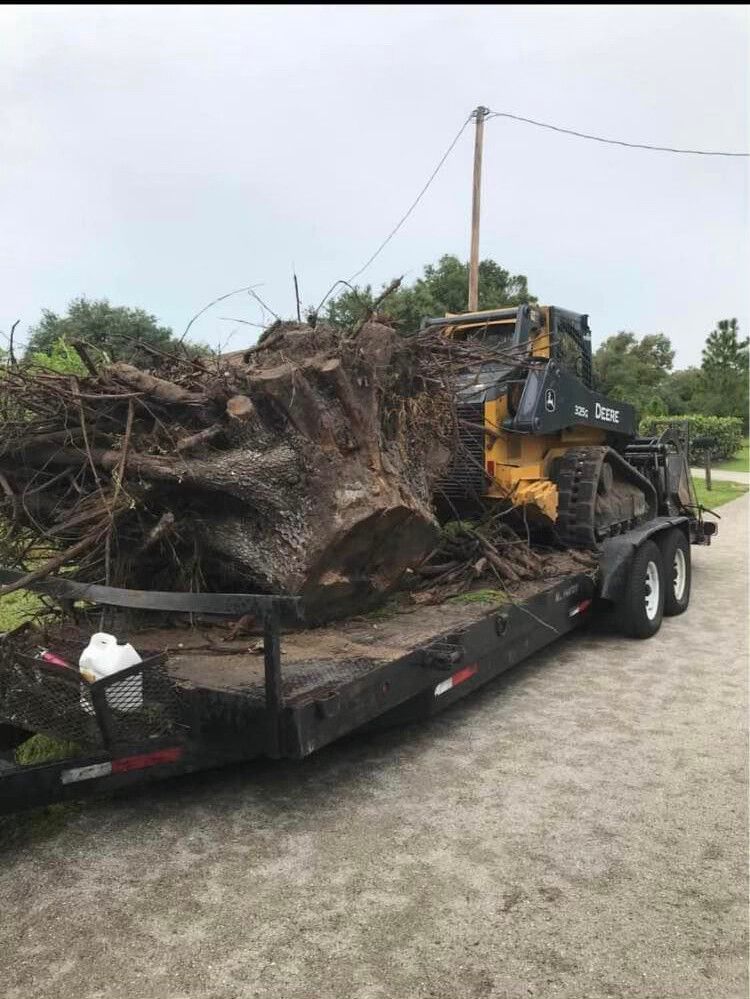
What Changes After Stump Grinding Completes
The grinder pulverizes the stump into chips, leaving a mulch-like material that can be removed or spread across the site as organic ground cover. The process exposes the root plate and grinds it down to below-grade level, preventing regrowth and eliminating trip hazards. Equipment access requires clear paths wide enough for the grinder, typically 36 inches for standard machines, though larger stumps may require track-mounted units.
Once grinding is finished, the stump cavity is filled with the resulting wood chips or replaced with soil if you plan to plant immediately in that location. The area settles over several weeks as the chips decompose, so adding additional soil later may be necessary to maintain grade. Properties prepared for construction or landscape installation benefit from complete root removal, which prevents subsurface obstructions during excavation or grading.
Stump grinding does not remove deep tap roots, which decay naturally below the grinding depth. Landscape preparation projects often combine grinding with soil amendment to improve planting conditions. Commercial land clearing includes grinding multiple stumps and grading the site to prepare for new construction or parking expansion.
Common Questions About This Service
Stump grinding projects differ based on stump size, root spread, and intended site use, so property owners often ask about process details and site impacts.
What is the difference between stump removal and stump grinding?
Complete stump removal extracts the entire root ball, requiring excavation equipment, while grinding pulverizes the visible stump and surface roots without large-scale digging.
How deep does the grinder cut into the soil?
Standard grinding reaches six to twelve inches below grade, sufficient for replanting grass or installing landscape features, though deeper grinding is available for construction or hardscape projects.
When should roots be removed along with the stump?
Root removal is necessary when roots interfere with planned construction, utility lines, driveways, or foundations, or when they extend into areas where they'll obstruct future excavation.
What happens to the wood chips after grinding?
Chips can be left on-site as mulch, spread across planting beds, or removed entirely depending on your landscape plans and the volume produced.
How soon can the area be replanted after stump grinding in Naples?
Grass seed or sod can be installed immediately after filling the cavity with soil, though waiting several weeks allows the ground to settle and reduces the need for additional fill.
Uncoast Tree Services addresses stumps of all sizes and coordinates grinding schedules with your broader landscape or construction timelines. Call (239) 572-5452 to arrange site evaluation and discuss root removal or restoration requirements.